Is a little chaos actually good for us?
Is a little chaos actually good for us?
Before I answer, I’d probably ask two questions: What do we mean by “chaos”? And what do we mean by “good”?
Chaos isn’t the same for everyone. As someone deeply involved in recovery work and someone who enjoys creating systems, I see chaos very differently than a coworker who needs quiet, routine, and an unchanging environment to feel comfortable. What looks like disorder to one person can look like possibility to another.
And “good” is a tricky word because it implies the opposite—bad. I tend to think instead in terms of stronger or weaker, more useful or less useful, more alive or less alive.
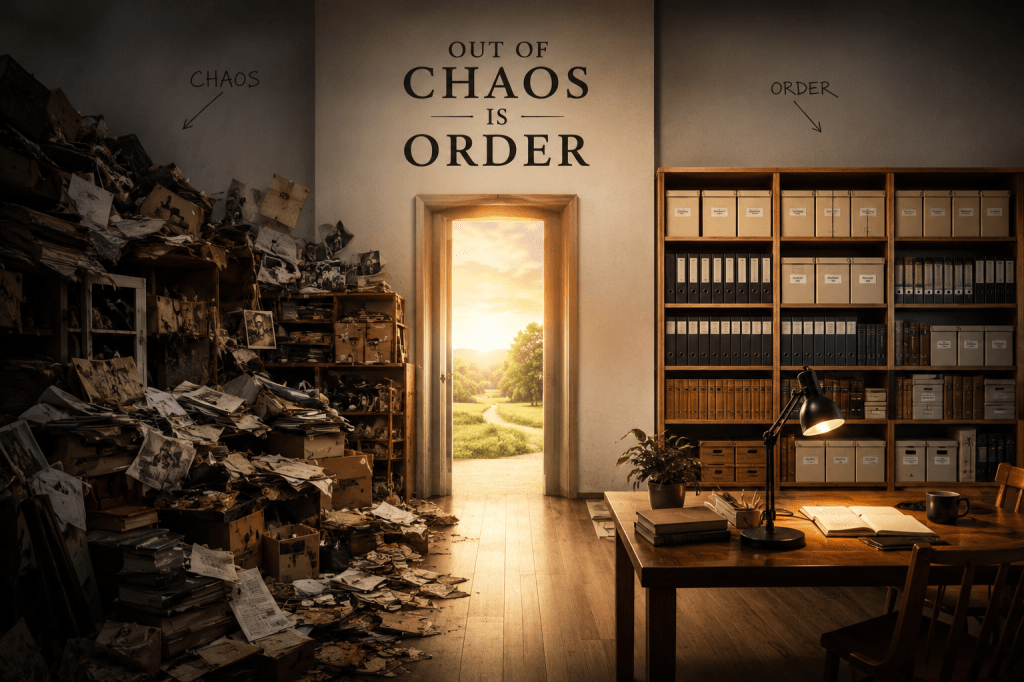
I’ve noticed that almost every creative act begins with a season of disorder. Clean out a garage. Reorganize a records room. Sort decades of archives. Even cleaning a house usually means making a bigger mess before everything finds its proper place.
Recovery is much the same. We often have to pull everything out into the open before we can put our lives back together in a healthier way. It can feel chaotic, but that temporary disorder is often the birthplace of clarity.
Nature works this way too. Forest fires make room for new growth. Rivers reshape their banks. Seasons continually dismantle and rebuild the landscape.
So yes, I think a little chaos can be good—not because chaos itself is the goal, but because it creates the opportunity for discovery, creativity, and transformation. The key is whether the chaos is leading somewhere. When it becomes purposeful rather than destructive, it often becomes the doorway to something stronger than what existed before.
I think this also reflects something I’ve noticed in myself over many conversations: I don’t see disorder as something to avoid—I see it as the raw material from which meaning, history, and beauty can be organized. That’s very consistent with the mindset of both an archivist and someone living the recovery principles.


Leave a Reply